単語と文法
単語
・江戸時代(えどじだい) – Edo period
・終わりごろ(おわりごろ) – around the end
・作られる(つくられる) – to be made
・広まる(ひろまる) – to spread
・言われている(いわれている) – it is said
・かけあわせる – to cross (plants/animals)
・ふつう – usual, normal
・種(たね) – seed
・さし木(さしき) – cutting (plant propagation)
・見た目(みため) – appearance
・時き(じき) – season, time
・花びら(はなびら) – petal
・木全体(きぜんたい) – the whole tree
・散る(ちる) – (flowers/petals) fall, scatter
・垂れる(たれる) – to droop, to hang down
・命(いのち) – life, lifespan
・印象(いんしょう) – impression
・はなやか – bright, showy
・たいてい – usually
・指す(さす) – to point to, to refer to
・種類(しゅるい) – type, kind
・目立つ(めだつ) – to stand out
・あざやか – vivid, bright
・ごうか – gorgeous, luxurious
・いっぽう – on the other hand
・ささやか – modest, simple
・もののあわれ – the emotion felt in the fleeting, short-lived beauty of things
・はかない – fleeting, short-lived
・心を動かされる(こころをうごかされる) – to be emotionally moved
・感じ方(かんじかた) – way of feeling/perceiving
・色どる(いろどる) – to color, to decorate
・見くらべる(みくらべる) – to compare by looking
文法
・〜ため(に)
Form:
verb plain form + ため
noun + の + ため
Example: 人気になったため – because it became popular
Meaning: because, due to
Explanation: Indicates a reason or cause.
・〜と言われています(〜といわれています)
Form: sentence plain form + と言われています
Example: 作られたと言われています – It is said that it was made
Meaning: it is said that…
Explanation: Used to report general information or hearsay.
・〜より(も)〜
Form: noun + より(も) + noun/adjective
Example: ソメイヨシノよりも – more than Someiyoshino
Meaning: more than, compared to
Explanation: Used to show comparison.
・〜(のよう)に見える
Form:
noun + (のよう)に見える
な-adjective + に見える
い-adjective + ように見える
verb plain form + ように見える
Example: ピンクに見える – looks pink
Meaning: looks like, appears to be
Explanation: Expresses appearance or impression.
・〜ことが多い(〜ことがおおい)
Form: verb plain form + ことが多い
Example: 指すことが多い – it is often referred to as
Meaning: often do ~
Explanation: Describes a frequent action or situation.
・〜(だ)と考える(〜(だ)とかんがえる)
Form: sentence plain form + と考える
Example: ソメイヨシノと考える人 – people who think it’s Someiyoshino
Meaning: think that…
Explanation: Expresses opinion or belief.
・〜ように
Form:
verb plain form + ように
noun + の + ように
Example: ソメイヨシノのように – like Someiyoshino
Meaning: like ~, as ~
Explanation: Used for comparisons or examples.
・〜(だ)と言える(〜(だ)といえる)
Form: sentence plain form + と言える
Example: 一つと言えるでしょう – can be said to be one of them
Meaning: can say that ~
Explanation: Used to offer an evaluation or conclusion.
・〜てください
Form: verb て-form + ください
Example: 見くらべてください – please compare
Meaning: please do ~
Explanation: Used to make a polite request.
桜といえばソメイヨシノ
(The version with furigana and the English translation are provided below.)
日本でいちばん有名なさくらは「ソメイヨシノ」です。ソメイヨシノは、江戸時代の終わりごろ(19せいきなかごろ)に、東京の「染井村(そめいむら)」というところで作られました。花の形や色がとてもきれいだったため、すぐに人気になり、日本中に広まりました。
ソメイヨシノは、「エドヒガン」というさくらと「オオシマザクラ」というさくらをかけあわせて作られたと言われています。ふつうの木とちがって、種ではふえません。「さし木」という方法で、同じ木のコピーのようにふやします。そのため、全国のソメイヨシノは、見た目がそっくりで、同じ地域では同じ時期にいっせいに咲きます。
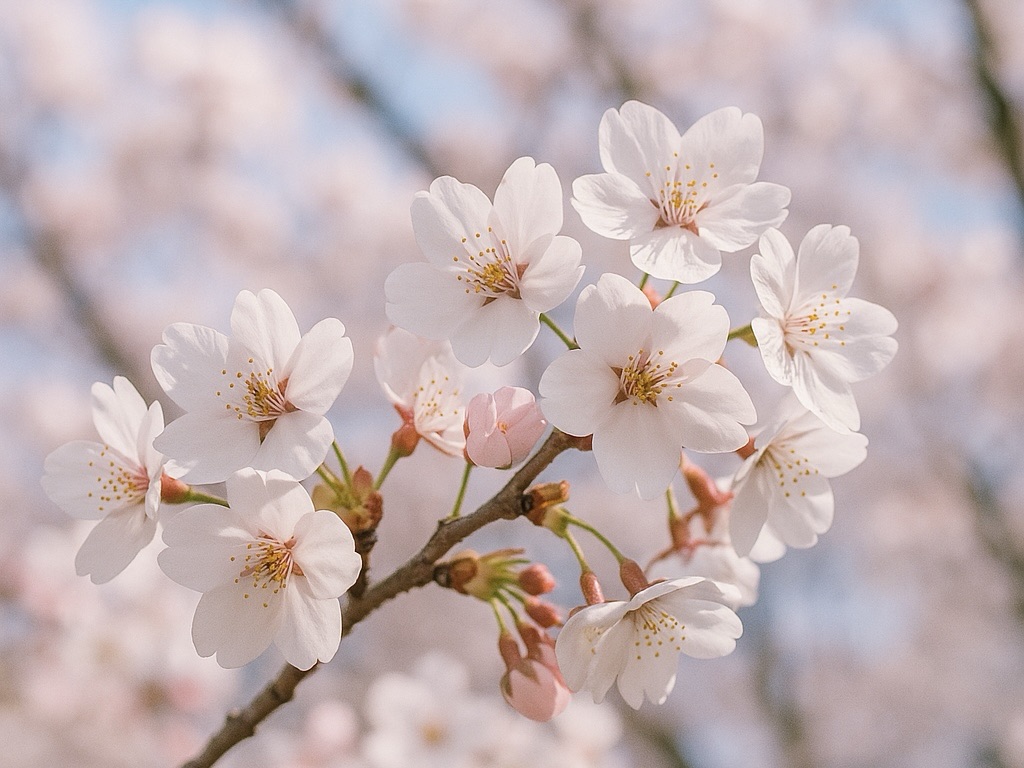
ソメイヨシノの花は、うすいピンク色で、花びらが五まいあります。葉よりもさきに花が咲くため、木全体がピンクに見えるのがとくちょうです。しかし、花の命は短く、一週間から十日ほどで散ってしまいます。
日本には、ソメイヨシノのほかにも美しいさくらがあります。たとえば、「枝垂れ桜(しだれざくら)」は、えだが下にたれていて、とてもやわらかい印象の花です。「八重桜(やえざくら)」は、花びらがたくさんあって、ボリュームがあり、見た目がとてもはなやかです。「河津桜(かわづざくら)」は、早く咲くさくらで、二月ごろから見ることができます。
日本では、春になると多くの人が「さくらを見に行こう」と言います。このときの「さくら」は、たいていソメイヨシノのことをさしています。ソメイヨシノがとても広まっているため、「さくら=ソメイヨシノ」と考える人が多いのです。
海外でも、日本のさくらはとても人気があります。しかし、海外ではソメイヨシノよりも、「カンザン」という八重桜が人気のある種類のひとつです。カンザンは花の色がこいピンクで、花びらも多く、大きくて目立ちます。ヨーロッパやアメリカでは、このように花の色があざやかで、見た目がごうかなさくらが好まれることが多いです。
いっぽう、日本では、ソメイヨシノのように、色がうすくて、ささやかで、すぐに散ってしまう花に美しさを感じる人が多いです。日本では、「もののあわれ」という考え方があり、うつくしくて、はかないものに心を動かされる文化があります。ソメイヨシノの花の短い命も、その一つと言えるでしょう。
春にはいろいろなさくらが日本をいろどります。さまざまなさくらを見くらべて、そのちがいを楽しんでみてください。
With Furigana
桜(さくら)といえばソメイヨシノ
日本(にほん)でいちばん有名(ゆうめい)なさくらは「ソメイヨシノ」です。ソメイヨシノは、江戸時代(えどじだい)の終(お)わりごろ(19せいきなかごろ)に、東京(とうきょう)の「染井村(そめいむら)」というところで作(つく)られました。花(はな)の形(かたち)や色(いろ)がとてもきれいだったため、すぐに人気(にんき)になり、日本中(にほんじゅう)に広(ひろ)まりました。
ソメイヨシノは、「エドヒガン」というさくらと「オオシマザクラ」というさくらをかけあわせて作(つく)られたと言(い)われています。ふつうの木(き)とちがって、種(たね)では増(ふ)えません。「さし木(き)」という方法(ほうほう)で、同(おな)じ木(き)のコピーのように増(ふ)やします。そのため、全国(ぜんこく)のソメイヨシノは、見(み)た目(め)がそっくりで、同(おな)じ地域(ちいき)では同(おな)じ時期(じき)にいっせいに咲(さ)きます。
ソメイヨシノの花(はな)は、薄(うす)いピンク色(いろ)で、花(はな)びらが五(ご)まいあります。葉(は)よりも先(さき)に花(はな)が咲(さ)くため、木(き)全体(ぜんたい)がピンクに見(み)えるのが特徴(とくちょう)です。しかし、花(はな)の命(いのち)は短(みじか)く、一週間(いっしゅうかん)から十日(とおか)ほどで散(ち)ってしまいます。
日本(にほん)には、ソメイヨシノのほかにも美(うつく)しいさくらがあります。たとえば、「枝垂(しだ)れ桜(ざくら)」は、枝(えだ)が下(した)に垂(た)れていて、とてもやわらかい印象(いんしょう)の花(はな)です。「八重桜(やえざくら)」は、花(はな)びらがたくさんあって、ボリュームがあり、見(み)た目(め)がとても華(はな)やかです。「河津桜(かわづざくら)」は、早(はや)く咲(さ)くさくらで、二月(にがつ)ごろから見(み)ることができます。
日本(にほん)では、春(はる)になると多(おお)くの人(ひと)が「さくらを見(み)に行(い)こう」と言(い)います。このときの「さくら」は、たいていソメイヨシノのことを指(さ)しています。ソメイヨシノがとても広(ひろ)まっているため、「さくら=ソメイヨシノ」と考(かんが)える人(ひと)が多(おお)いのです。
海外(かいがい)でも、日本(にほん)のさくらはとても人気(にんき)があります。しかし、海外(かいがい)ではソメイヨシノよりも、「カンザン」という八重桜(やえざくら)が人気(にんき)のある種類(しゅるい)のひとつです。カンザンは花(はな)の色(いろ)が濃(こ)いピンクで、花(はな)びらも多(おお)く、大(おお)きくて目立(めだ)ちます。ヨーロッパやアメリカでは、このように花(はな)の色(いろ)が鮮(あざ)やかで、見(み)た目(め)が豪華(ごうか)なさくらが好(この)まれることが多(おお)いです。
一方(いっぽう)、日本(にほん)では、ソメイヨシノのように、色(いろ)が薄(うす)くて、ささやかで、すぐに散(ち)ってしまう花(はな)に美(うつく)しさを感(かん)じる人(ひと)が多(おお)いです。日本(にほん)では、「もののあわれ」という考(かんが)え方(かた)があり、美(うつく)しくて、儚(はかな)いものに心(こころ)を動(うご)かされる文化(ぶんか)があります。ソメイヨシノの花(はな)の短(みじか)い命(いのち)も、その一(ひと)つと言(い)えるでしょう。
春(はる)にはいろいろなさくらが日本(にほん)を彩(いろど)ります。さまざまなさくらを見比(みくら)べて、その違(ちが)いを楽(たの)しんでみてください。
English Translation
When We Say “Cherry Blossom”, It Means Someiyoshino
The most famous cherry blossom in Japan is called “Someiyoshino.” It was created in the late Edo period (around the mid-19th century) in a place called Somei Village in Tokyo. Because its flower shape and color were very beautiful, it quickly became popular and spread all across Japan.
Someiyoshino is said to be a cross between a cherry blossom called “Edohigan” and another called “Oshimazakura.” Unlike most trees, it does not grow from seeds. Instead, it is propagated through a method called “cutting,” which produces clones of the original tree. Because of this, Someiyoshino trees across Japan look nearly identical, and in the same region, they tend to bloom all at once around the same time.
The flowers of Someiyoshino are a pale pink color, with five petals each. Since the flowers bloom before the leaves appear, the entire tree looks pink. This is one of its main characteristics. However, the life of the flowers is short — they fall after only about a week to ten days.
In Japan, there are other beautiful kinds of cherry blossoms besides Someiyoshino. For example, “Shidarezakura” (weeping cherry) has drooping branches, which give it a soft and gentle look. “Yaezakura” (double-flowered cherry) has many petals and a full, voluminous appearance, making it look very bright and decorative. “Kawazuzakura” blooms early in the season and can be seen from around February.
In Japan, when spring comes, many people say, “Let’s go see the cherry blossoms.” In this case, “cherry blossoms” usually refers to Someiyoshino. Since Someiyoshino is so widespread, many people think “cherry blossom = Someiyoshino.”
Japanese cherry blossoms are also very popular overseas. However, abroad, a type of cherry blossom called “Kanzan,” which is a kind of Yaezakura, is one of the most popular. Kanzan flowers are a deep pink, with many large petals, and they stand out. In Europe and America, people tend to prefer flowers that are vivid in color and have a gorgeous appearance.
On the other hand, in Japan, many people find beauty in cherry blossoms like Someiyoshino, which are pale in color, modest, and fall quickly. In Japanese culture, there is a concept called mono no aware, which is the appreciation of things that are beautiful and fleeting. The short life of Someiyoshino flowers is one example of this idea.
In spring, many kinds of cherry blossoms color Japan beautifully. Try comparing the different types and enjoy their unique charms.
話しましょう!
- あなたの国には桜の木がありますか?
- ソメイヨシノの花が短いあいだしか咲かないことをどう思いますか?
- あなたはどの種類の桜がいちばん好きですか?
- ソメイヨシノはたねから育ちません。これはおどろきましたか?
- 海外と日本で、桜の好みがちがうことについてどう思いますか?
- 「さくら=ソメイヨシノ」という考えについてどう思いますか?
- 「もののあわれ」という考え方に共感できますか?
- ソメイヨシノのように、ささやかで短い美しさはあなたにとって魅力的ですか?
- あなたの国では、どんな花が春に人気ですか?
- 日本でお花見をしてみたいと思いますか?
English translation
Discussion Questions
- Are there cherry blossom trees in your country?
- What do you think about the fact that Someiyoshino blooms for only a short time?
- Which type of cherry blossom do you like the most?
- Were you surprised that Someiyoshino doesn’t grow from seeds?
- What do you think about the difference in cherry blossom preferences between Japan and other countries?
- What do you think about the idea that “sakura” usually means Someiyoshino in Japan?
- Can you relate to the idea of mono no aware (the beauty of impermanence)?
- Do you find the modest and short-lived beauty of Someiyoshino attractive?
- What flowers are popular in spring in your country?
- Would you like to try hanami (cherry blossom viewing) in Japan?
Enjoy learning!
 Nihongo Articles