単語と文法
単語
・縄文人(じょうもんじん) – Jomon people
・弥生人(やよいじん) – Yayoi people
・氷河時代(ひょうがじだい) – Ice Age
・旧石器人(きゅうせっきじん) – Paleolithic people
・移動(いどう) – movement / migration
・定住(ていじゅう) – permanent settlement / living in one place
・土器(どき) – earthenware / clay pot
・竪穴住居(たてあなじゅうきょ) – pit dwelling
・特徴(とくちょう) – characteristic / feature
・しっかり – firm / strong
・はっきり – clear / well-defined
・遺伝子(いでんし) – gene
・民族(みんぞく) – ethnic group / people
・狩猟(しゅりょう) – hunting
・採集(さいしゅう) – gathering (of food, plants, etc.)
・漁(りょう) – fishing
・神(かみ) – god / deity / divine spirit
・崇拝(すうはい)する – to worship / to revere / to venerate
・自然崇拝(しぜんすうはい) – nature worship
・神道(しんとう) – Shinto (Japan’s indigenous religion, though more a set of cultural practices than a formal faith)
・宗教(しゅうきょう) – religion
・煮る(にる) – to boil / to simmer
・貯める(ためる) – to store / to save
・実用的(じつようてき) – practical / useful
・展覧会(てんらんかい) / 展(てん) – exhibition
・訪れる(おとずれる) – to visit
・惹かれる(ひかれる) – to be attracted / to be fascinated
・受け継ぐ(うけつぐ) – to inherit / to pass down
・魅力(みりょく) – charm / appeal
文法
・連用中止(continuative)
Form:
verb stem (ます-form without ます)
い-adjective without い + く
な-adjective + で
noun + で
Example: 人々はアフリカからアジア大陸へ広がり、日本にもやってきました。– People spread from Africa to the Asian continent and came to Japan as well.
Meaning: (and) ~
Explanation: Connects clauses smoothly without using conjunctions like “そして.” The first part ends in a continuative form, showing a soft, natural link between actions, qualities, or states. Common in formal or written Japanese.
・〜と考えられている
Form: plain style + と考えられている
Example: 島を渡って日本へ来たと考えられています。
– It is thought that (they) came to Japan by crossing islands.
Meaning: it is thought that ~
Explanation: A passive expression used to convey widely accepted theories or assumptions in a neutral, objective tone.
・〜れる / られる(passive)
Form:
Group 1 (u-verbs): verb in ない-form (drop ない) + れる
Group 2 (ruverbs): verb stem + られる
Group 3 (Irregular verbs): される / 来られる
Example: 日本に最初にやってきた人たちは、旧石器人(きゅうせっきじん)とよばれています。
– The first people who came to Japan are called “Paleolithic people.”
Meaning: be ~ed (passive form)
Explanation: Indicates that the subject is being acted upon. Often used in formal or explanatory contexts.
・〜ようだ
Form: plain style / な-adjective with な + ようだ
Example: 移動しながらくらしていたようです。
– It seems that they lived while moving from place to place.
Meaning: it seems that ~ / it appears that ~
Explanation: Expresses the speaker’s impression or guess based on indirect information or signs.
・〜ようになる
Form: verb dictionary form + ようになる
Example: 家を使うようになりました。
– They began to use houses.
Meaning: to come to (do) / to start (doing)
Explanation: Indicates a change in habit, ability, or state. Often used for gradual or natural transitions.
・〜として
Form: noun + として
Example: 縄文人の大きな特徴として、縄文土器があります。
– One major feature of the Jomon people is Jomon pottery.
Meaning: as ~ / in the role of ~
Explanation: Shows the role, identity, or function of something. Often used to highlight a specific characteristic or perspective.
日本人のルーツと縄文人のくらし
(The version with furigana and the English translation are provided below.)
日本人のルーツは、主に2つのグループからきています。1つ目は縄文人(じょうもんじん)、2つ目は弥生人(やよいじん)です。
この記事では、縄文人のルーツと文化について見ていきましょう。
⚫︎アフリカから日本へ⚫︎
人類(じんるい)は、約20万年前にアフリカで生まれました。
その後、人々はアフリカからアジア大陸へ広がり、氷河時代(ひょうがじだい)に日本にもやってきました。
この時、日本と大陸の間は今よりも海がせまく、いくつかの島を渡って日本へ来たと考えられています。
⚫︎最初の人類は「旧石器人」⚫︎
日本に最初にやってきた人たちは、旧石器人(きゅうせっきじん)と呼ばれています。
この人たちは、動物を狩(か)ったり、木の実をひろったりして生活していました。まだ家はなく、移動しながらくらしていたようです。
⚫︎縄文人とは⚫︎
時が経ち、紀元前1万4000年ごろから、生活のスタイルが大きく変わりました。
人々は、定住(ていじゅう)生活をはじめ、土器(どき)や竪穴住居というスタイルの家を使うようになりました。
このころの人たちを縄文人とよびます。
縄文人の体の特徴は、骨がしっかりしていて、顔立ちがはっきりしていることです。
その遺伝子は、今のアイヌ民族(みんぞく)や沖縄の人たちに近いことがわかっています。
⚫︎縄文人の生活と文化⚫︎
縄文人は、狩猟(しゅりょう)・採集(さいしゅう)・漁(りょう)をしながら、自然といっしょに生きていました。
山、川、木、石など、自然すべてが“神”だと信じていました。
このような自然を崇拝(すうはい)する気持ち『自然崇拝(しぜんすうはい)』は、今の神道(しんとう)という日本の宗教にもつながっています。
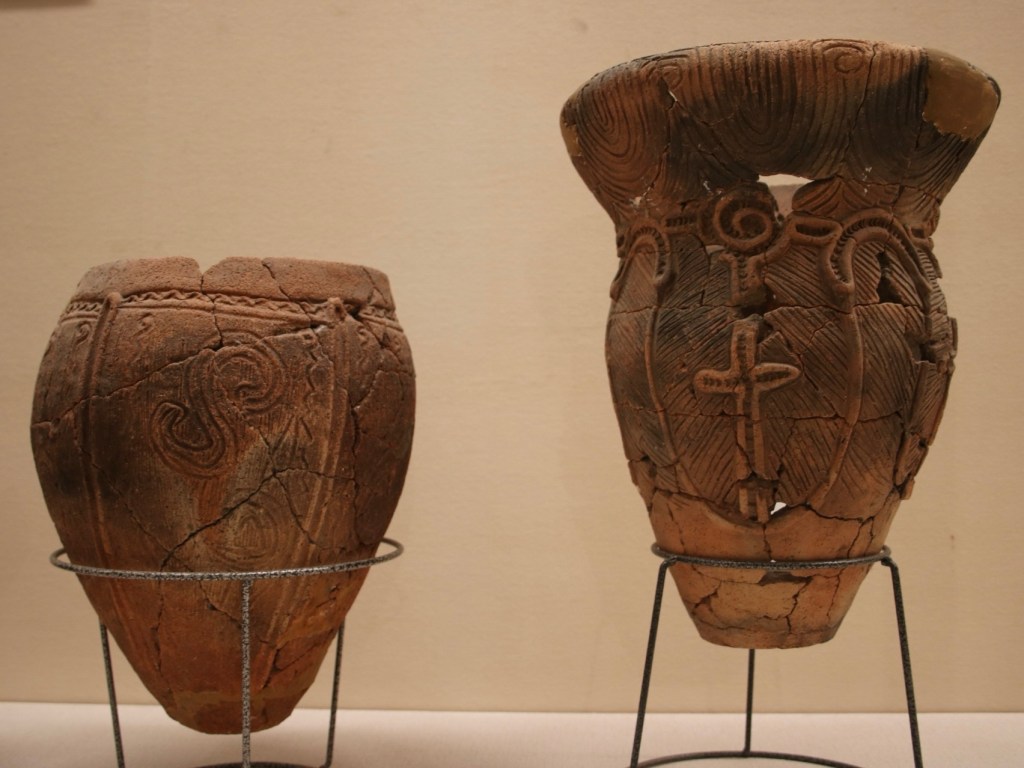
また、縄文人の大きな特徴として、縄文土器(じょうもんどき)があります。土器を使って食べ物を煮たり、貯(た)めたりしていました。
この縄文土器は、今のところ世界で一番古い“実用的な土器”といわれています。
⚫︎今の縄文ブーム⚫︎
最近、日本では縄文時代の文化にあこがれる人が増えています。
2018年には東京国立博物館で大きな「縄文展(じょうもんてん)」が開かれ、多くの人が訪(おとず)れました。
土器のデザインにひかれる若い人も多く、『縄文ブーム』とも言われています。
⚫︎まとめ⚫︎
日本人のルーツは、アフリカから来た人々から始まります。
氷河時代に日本にわたり、生活の変化とともに縄文人が生まれました。
彼らの文化や精神は、今の日本にも受け継がれています。
そしてその魅力は、今の時代にも新しく感じられているのです。
With Furigana
日本人(にほんじん)のルーツと縄文人(じょうもんじん)のくらし
日本人(にほんじん)のルーツは、主(おも)に2つのグループからきています。1つ目(め)は縄文人(じょうもんじん)、2つ目(め)は弥生人(やよいじん)です。
この記事(きじ)では、縄文人(じょうもんじん)のルーツと文化(ぶんか)について見(み)ていきましょう。
⚫︎アフリカから日本(にほん)へ⚫︎
人類(じんるい)は、約(やく)20万年(まんねん)前(まえ)にアフリカで生(う)まれました。
その後(ご)、人々(ひとびと)はアフリカからアジア大陸(たいりく)へ広(ひろ)がり、氷河時代(ひょうがじだい)に日本(にほん)にもやってきました。
この時(とき)、日本(にほん)と大陸(たいりく)の間(あいだ)は今(いま)よりも海(うみ)がせまく、いくつかの島(しま)を渡(わた)って日本(にほん)へ来(き)たと考(かんが)えられています。
⚫︎最初(さいしょ)の人類(じんるい)は「旧石器人(きゅうせっきじん)」⚫︎
日本(にほん)に最初(さいしょ)にやってきた人(ひと)たちは、旧石器人(きゅうせっきじん)と呼(よ)ばれています。
この人(ひと)たちは、動物(どうぶつ)を狩(か)ったり、木(き)の実(み)を拾(ひろ)ったりして生活(せいかつ)していました。まだ家(いえ)はなく、移動(いどう)しながら暮(く)らしていたようです。
⚫︎縄文人(じょうもんじん)とは⚫︎
時(とき)が経(た)ち、紀元前(きげんぜん)1万(まん)4000年(ねん)ごろから、生活(せいかつ)のスタイルが大(おお)きく変(か)わりました。
人々(ひとびと)は、定住(ていじゅう)生活(せいかつ)を始(はじ)め、土器(どき)や竪穴住居(たてあなじゅうきょ)というスタイルの家(いえ)を使(つか)うようになりました。
このころの人(ひと)たちを縄文人(じょうもんじん)と呼(よ)びます。
縄文人(じょうもんじん)の体(からだ)の特徴(とくちょう)は、骨(ほね)がしっかりしていて、顔立(かおだ)ちがはっきりしていることです。
その遺伝子(いでんし)は、今(いま)のアイヌ民族(みんぞく)や沖縄(おきなわ)の人(ひと)たちに近(ちか)いことが分(わ)かっています。
⚫︎縄文人(じょうもんじん)の生活(せいかつ)と文化(ぶんか)⚫︎
縄文人(じょうもんじん)は、狩猟(しゅりょう)・採集(さいしゅう)・漁(りょう)をしながら、自然(しぜん)といっしょに生(い)きていました。
山(やま)、川(かわ)、木(き)、石(いし)など、自然(しぜん)すべてが “神(かみ)” だと信(しん)じていました。
このような自然(しぜん)を崇拝(すうはい)する気持(きも)ち『自然崇拝(しぜんすうはい)』は、今(いま)の神道(しんとう)という日本(にほん)の宗教(しゅうきょう)にもつながっています。
また、縄文人(じょうもんじん)の大(おお)きな特徴(とくちょう)として、縄文土器(じょうもんどき)があります。
土器(どき)を使(つか)って食(た)べ物(もの)を煮(に)たり、貯(た)めたりしていました。
この縄文土器(じょうもんどき)は、今(いま)のところ世界(せかい)で一番(いちばん)古(ふる)い“実用的(じつようてき)な土器(どき)”といわれています。
⚫︎今(いま)の縄文(じょうもん)ブーム⚫︎
最近(さいきん)、日本(にほん)では縄文時代(じょうもんじだい)の文化(ぶんか)にあこがれる人(ひと)が増(ふ)えています。
2018年(ねん)には東京国立博物館(とうきょうこくりつはくぶつかん)で大(おお)きな「縄文展(じょうもんてん)」が開(ひら)かれ、多(おお)くの人(ひと)が訪(おとず)れました。
土器(どき)のデザインにひかれる若(わか)い人(ひと)も多(おお)く、“縄文(じょうもん)ブーム”とも言(い)われています。
⚫︎まとめ⚫︎
日本人(にほんじん)のルーツは、アフリカから来(き)た人々(ひとびと)から始(はじ)まります。
氷河時代(ひょうがじだい)に日本(にほん)に渡(わた)り、生活(せいかつ)の変化(へんか)とともに縄文人(じょうもんじん)が生(う)まれました。
彼(かれ)らの文化(ぶんか)や精神(せいしん)は、今(いま)の日本(にほん)にも受(う)け継(つ)がれています。
そしてその魅力(みりょく)は、今(いま)の時代(じだい)にも新(あたら)しく感(かん)じられているのです。
English Translation
The Roots of the Japanese People and the Life of the Jomon People
The roots of the Japanese people come mainly from two groups.
The first is the Jomon people, and the second is the Yayoi people.
In this article, let’s take a look at the roots and culture of the Jomon people.
⚫︎From Africa to Japan⚫︎
Humankind was born in Africa around 200,000 years ago.
After that, people spread from Africa to the Asian continent, and during the Ice Age, they also came to Japan.
At that time, the sea between Japan and the continent was narrower than it is now, and it is believed that they came to Japan by crossing a number of islands.
⚫︎The First Humans: “Paleolithic People”⚫︎
The people who first came to Japan are called Paleolithic people.
These people lived by hunting animals and gathering nuts.
They didn’t have houses yet and seemed to have lived while moving from place to place.
⚫︎Who Were the Jomon People?⚫︎
As time passed, around 14,000 BCE, the lifestyle changed greatly.
People began living in one place and started using earthenware and a style of housing called pit dwellings.
The people of this period are called the Jomon people.
The physical characteristics of the Jomon people include strong bones and clearly defined facial features.
It has been found that their genes are similar to those of today’s Ainu people and the people of Okinawa.
⚫︎The Life and Culture of the Jomon People⚫︎
The Jomon people lived in harmony with nature through hunting, gathering, and fishing.
They believed that each part of nature—mountains, rivers, trees, and stones—was a god.
The idea of worshipping each natural thing as a god, known as “nature worship”, is connected to Shinto, Japan’s indigenous religion.
Another major characteristic of the Jomon people is Jomon pottery.
They used pottery to cook food and store it.
This Jomon pottery is said to be the oldest practical pottery in the world so far.
⚫︎Today’s Jomon Boom⚫︎
Recently, more and more people in Japan are becoming fascinated by the culture of the Jomon period.
In 2018, a major Jomon Exhibition was held at the Tokyo National Museum, and many people visited.
There are also many young people who are drawn to the designs of the pottery, and this is sometimes called the “Jomon boom.”
⚫︎Summary⚫︎
The roots of the Japanese people began with those who came from Africa.
They came to Japan during the Ice Age, and as their way of life changed, the Jomon people were born.
Their culture and spirit have been passed down to today’s Japan, and their appeal still feels fresh, even in the modern age.
読解問題
1. 記事の内容に合うのはどれですか。
A. 縄文人はアフリカから直接日本に来た。
B. 縄文人は定住生活をしていた。
C. 縄文人は今と同じような家に住んでいた。
D. 縄文人は米作りをしていた。
正解
B
2. 記事の内容に合わないのはどれですか。
A. 縄文人の遺伝子は、今の日本人全体とほぼ同じである。
B. 縄文土器は、世界で最も古い実用的な土器だと言われている。
C. 縄文人は、自然のすべてに神がいると考えていた。
D. 縄文人の遺伝子は、アイヌや沖縄の人に近い。
正解
A
3. 記事によると、日本に最初に来た人たちは何と呼ばれていますか。
A. 弥生人
B. 旧石器人
C. 縄文人
D. 古墳人
正解
B
4. 記事の内容に近いのはどれですか。
A. 縄文展は日本で初めて開かれた博物館だった。
B. 最近の若い人たちは縄文土器のデザインにひかれている。
C. 縄文時代の文化はすでに忘れられている。
D. 縄文人は外国の文化をまねて土器を作った。
正解
B
話しましょう!
- 人類の始まりはアフリカだと聞いたことがありますか?
- 定住生活と移動生活、どちらが大変だと思いますか?なぜですか?
- あなたは自然の中に「神」がいるという考えについて、どう思いますか?
- 縄文人は自然といっしょに生きていたと言われています。あなたは自然の中での生活にあこがれますか?
- あなたの国には、縄文土器のように大昔から残っているものがありますか?
- 縄文展のようなイベントがあれば、行ってみたいと思いますか?
- 縄文人の文化の中で、どんなところが一番おもしろいと思いましたか?
- あなたの国や地域には、どんな人たちが昔から住んでいましたか?その人たちの文化や特徴について知っていますか?
- あなたの国にも「昔の人のくらし」を学べる場所や博物館がありますか?どんなところですか?
- あなたが縄文時代に生まれていたら、どんな生活をしてみたいですか?理由も教えてください。
English translation
Let’s talk!
- Have you heard that the origin of humankind is in Africa?
- Which do you think is more difficult, a settled life or a nomadic life? Why?
- What do you think about the idea that there are gods in nature?
- It is said that the Jomon people lived together with nature. Do you admire the idea of living in nature?
- Is there anything in your country that has remained since ancient times, like Jomon pottery?
- If there were an event like the Jomon Exhibition, would you like to go?
- What part of Jomon culture did you find the most interesting?
- In your country or region, what kind of people have lived since long ago? Do you know about their culture or characteristics?
- In your country, is there a place where you can learn about the lives of people from long ago? What kind of place is it?
- If you had been born in the Jomon period, what kind of life would you like to try? Please tell us the reason.
Enjoy learning!
 Nihongo Articles