単語と文法
単語
・カスハラ – customer harassment (short for カスタマーハラスメント)
・評価(ひょうか) – evaluation / reputation
・対応する(たいおうする) – to deal with / to handle
・時間通り(じかんどおり) – on time
・清潔(せいけつ) – cleanliness / hygienic
・理不尽(りふじん) – unreasonable / unfair
・クレーム – complaint (loanword)
・無理な(むりな) – unreasonable / impossible
・要求(ようきゅう) – demand / request
・行動(こうどう) – action / behaviour
・怒鳴る(どなる) – to shout / to yell
・文句(もんく) – complaint / grumbling
・脅す(おどす) – to threaten
・謝罪(しゃざい) – apology
・くり返す(くりかえす) – to repeat
・起きる(おきる) – to occur / to happen
・勘違い(かんちがい) – misunderstanding / misinterpretation
・謝る(あやまる) – to apologize
・先に(さきに) – beforehand / first
・通る(とおる) – to be accepted / approved (as in a request being granted)
・我慢する(がまんする) – to endure / to be patient
・企業(きぎょう) – company / corporation
・不当(ふとう) – unjust / improper
・記録する(きろくする) – to record
・ひどい – terrible / awful
・警察(けいさつ) – police
・連絡する(れんらくする) – to contact
・対策(たいさく) – measure / countermeasure
・対等(たいとう) – equal / on equal footing
・相手(あいて) – the other person / counterpart
・思いやる(おもいやる) – to be considerate / to care for
・略(りゃく) – abbreviation / shortened form
文法
・~aれる/~られる(passive
Form:
Group 1 (u-verbs): verb ない-form (drop ない) + れる
Group 2 (ruverbs): verb stem + られる
Group 3 (Irregular verbs): される / 来られる
Example: 日本のサービスは、世界でもとても高く評価されています。
– Japanese service is highly regarded around the world.
Meaning: be ~ed
Explanation: Indicates that the subject receives an action.
・~てくれる(someone does something for me / us)
Form: person が + verb て-form + くれる
Example: 店員さんが親切で、ていねいに対応してくれます。– The store staff are kind and treat customers politely.
Explanation: Indicates that someone does a favor or helpful action for the speaker or someone close to them. Often expresses gratitude or appreciation.
・~し(and / not only ~ but also ~)Form:
plain form of verb, い-adjective + し
な-adjective (drop な), noun + だ + し
Example: 電車も時間どおりに来るし、ホテルやレストランも清潔で気持ちがいいです。
– Trains come on time, and hotels and restaurants are clean and pleasant.
Explanation: Used to list multiple reasons or factors. Often implies that there are other reasons not mentioned. Commonly used in speech to build up justification or explanation.
・~ようになる(to come to do / reach a point where ~)
Form: verb dictionary form + ようになる
Example: 最近、「カスハラ」という言葉がよく聞かれるようになりました。– Lately, the word “kasuhara” has started to be heard more often.
Explanation: Describes a change over time in habits, ability, or situation.
・(たとえ)でも/ても(even if / even though)Form: noun + でも/verb て-form, adjective て-form + も
Example1: 謝罪しても何度も文句をくり返す –They repeat their complaints even after an apology.
Example2: たとえお客さんに問題があっても、店員が先に謝ります。 – Even if the problem is caused by the customer, staff often apologise first.
Explanation: Used to express a contrast or an action that continues regardless of another action or condition.
When combined with たとえ―for example, たとえお客さんに問題があっても (“Even if the problem is caused by the customer”)―it emphasizes the hypothetical nature of the situation and strengthens the contrast.
・~aせる / ~させる(causative)Form:
Group 1 (u-verbs): verb ない-form (drop ない) + せる
Group 2 (ru-verbs): verb stem + させる
Group 3 (irregular verbs): する → させる / 来る(くる)→ 来させる(こさせる)
Example: これが、「強く言えば何でも通る」と思わせてしまうこともあるのです。
– This can make the customer think, “If I push hard, I can get what I want.”
Explanation: Used to express making or letting someone do something.
・~すぎる(too much / excessively)Form:
verb stem / い-adjective (drop い) / な-adjective (drop な) + すぎる
Example: スタッフががまんしすぎてしまうこともあります。– Staff sometimes endure too much.
Explanation: Used to express that something is done or is in a state to an excessive degree.
・~てしまう(completion / regret)
Form: verb て-form + しまう
Example1: これが「強く言えば何でも通る」と思わせてしまうこともあるのです。
– This can make the customer think, “If I push hard, I can get what I want.”
Example2: スタッフががまんしすぎてしまうこともあります。– Staff sometimes endure too much.
Explanation: Expresses completion (especially unexpected) or regret. Often used when something happens unintentionally or when the result is unfortunate. In English, it is often not directly translated.
・~てくる(has come to ~ / to begin to ~)Form: verb て-form + くる
Example: 最近では企業も変わってきています。– Recently, companies have also been changing.
Explanation: Indicates a change or action that started in the past and is approaching the present. Often used to describe gradual developments, emotional shifts, or social trends.
・~べき(should / ought to)
Form: verb dictionary form + べき(する → すべき or するべき)
Example: 「お客だから何をしてもいい」という考え方は、これから変わっていくべきです。– The idea that “customers can do anything because they’re paying” needs to change.
Explanation: Expresses moral or logical obligation. Used to state what someone should do or what is generally the right thing to do. Often used in formal writing or strong opinions.
お客様は神様?日本のカスハラ問題
(The version with furigana and the English translation are provided below.)
日本のサービスは、世界でもとても高く評価されています。多くの店で、店員が親切で、ていねいに対応してくれます。電車も時間どおりに来るし、ホテルやレストランも清潔で気持ちがいいです。
このような「おもてなし」の文化は、日本のサービスの良いところですが、じつは問題もあります。
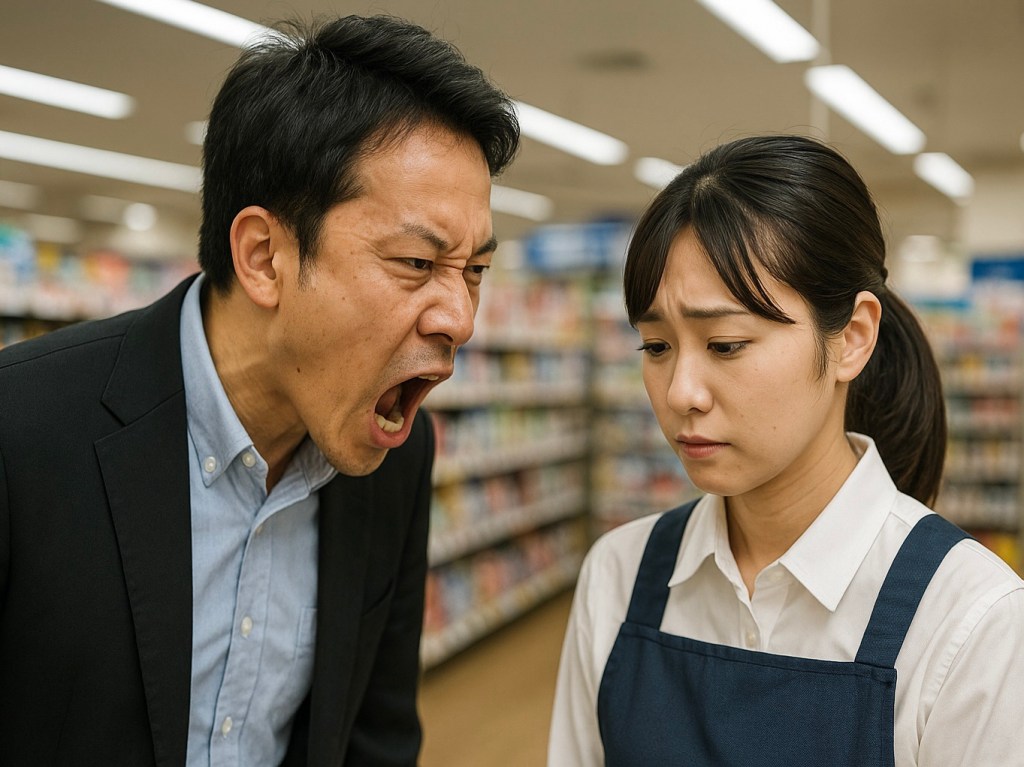
最近、「カスハラ」という言葉がよく聞かれるようになりました。カスハラとは、「カスタマーハラスメント(Customer Harassment)」のことで、お客が店員やスタッフに対して、理不尽(りふじん)なクレームや無理な要求をすることです。
たとえば、こんな行動がカスハラになります。
- 大声でどなる
- 長時間文句を言う
- ネットで悪口を書くと脅(おど)す
- 謝罪しても何度も文句をくり返す
どうしてこのようなことが起きるのでしょうか?
一つの理由は、日本では「お客様は神様です」という考え方が強くあることです。もともとこの言葉は、歌手の三波春夫(みなみはるお)が言ったもので、ステージでの気持ちを表したものでした。しかし、今では「お客は何をしてもいい」という意味だと勘違いしている人もいます。
また、日本のサービスでは、トラブルが起きたときはすぐに謝ることが多いです。たとえお客さんに問題があっても、店員が先に謝ります。これが、「強く言えば何でも通る」と思わせてしまうこともあるのです。
さらに、スタッフががまんしすぎてしまうこともあります。そのため、カスハラを止めるのが難しくなります。
しかし、最近では企業も変わってきています。
- 「不当なクレームには対応しません」と店に書く
- カメラをつけて、問題があったときのために記録する
- ひどい場合は警察に連絡する
というような対策をしています。
日本のサービスはすばらしいですが、「お客だから何をしてもいい」という考え方は、これから変わっていくべきです。サービスをする人も、サービスをされる人も、対等に、相手を思いやる気持ちが大切です。
With Furigana
お客様(おきゃくさま)は神様(かみさま)?日本(にほん)のカスハラ問題(もんだい)
日本(にほん)のサービスは、世界(せかい)でもとても高(たか)く評価(ひょうか)されています。多(おお)くの店(みせ)で、店員(てんいん)が親切(しんせつ)で、ていねいに対応(たいおう)してくれます。電車(でんしゃ)も時間(じかん)どおりに来(く)るし、ホテルやレストランも清潔(せいけつ)で気持(きも)ちがいいです。
このような「おもてなし」の文化(ぶんか)は、日本(にほん)のサービスの良(よ)いところですが、じつは問題(もんだい)もあります。
最近(さいきん)、「カスハラ」という言葉(ことば)がよく聞(き)かれるようになりました。カスハラとは、「カスタマーハラスメント(Customer Harassment)」のことで、お客(きゃく)が店員(てんいん)やスタッフに対(たい)して、理不尽(りふじん)なクレームや無理(むり)な要求(ようきゅう)をすることです。
たとえば、こんな行動(こうどう)がカスハラになります。
- 大声(おおごえ)でどなる
- 長時間(ちょうじかん)文句(もんく)を言(い)う
- ネットで悪口(わるぐち)を 書(か)くと脅(おど)す
- 謝罪(しゃざい)しても何度(なんど)も文句(もんく)をくり返(かえ)す
どうしてこのようなことが起(お)きるのでしょうか?
一(ひと)つの理由(りゆう)は、日本(にほん)では「お客様(きゃくさま)は神様(かみさま)です」という考(かんが)え方(かた)が強(つよ)くあることです。もともとこの言葉(ことば)は、歌手(かしゅ)の三波春夫(みなみはるお)が言(い)ったもので、ステージでの気持(きも)ちを表(あらわ)したものでした。しかし、今(いま)では「お客(きゃく)は何(なに)をしてもいい」という意味(いみ)だと勘違(かんちが)いしている人(ひと)もいます。
また、日本(にほん)のサービスでは、トラブルが起(お)きたときはすぐに謝(あやま)ることが多(おお)いです。たとえお客(きゃく)さんに問題(もんだい)があっても、店員(てんいん)が先(さき)に謝(あやま)ります。これが、「強(つよ)く言(い)えば何(なん)でも通(とお)る」と思(おも)わせてしまうこともあるのです。
さらに、スタッフががまんしすぎてしまうこともあります。そのため、カスハラを止(と)めるのが難(むずか)しくなります。
しかし、最近(さいきん)では企業(きぎょう)も変(か)わってきています。
- 「不当(ふとう)なクレームには対応(たいおう)しません」と店(みせ)に書(か)く
- カメラをつけて、問題(もんだい)があったときのために記録(きろく)する
- ひどい場合(ばあい)は警察(けいさつ)に連絡(れんらく)する
というような対策(たいさく)をしています。
日本(にほん)のサービスはすばらしいですが、「お客(きゃく)だから何(なに)をしてもいい」という考(かんが)え方(かた)は、これから変(か)わっていくべきです。サービスをする人(ひと)も、サービスをされる人(ひと)も、対等(たいとう)に、相手(あいて)を思(おも)いやる気持(きも)ちが大切(たいせつ)です。
English Translation
Is the Customer a God? – The Problem of Customer Harassment in Japan
Japanese service is highly regarded around the world. In many stores, staff are kind and treat customers politely. Trains come on time, and hotels and restaurants are clean and pleasant.
This spirit of “omotenashi” (Japanese hospitality) is one of the great things about Japanese service, but there is also a problem.
Recently, the word “kasuhara” has been heard more often. “Kasuhara” is short for Customer Harassment — when customers treat store staff or workers unfairly, making unreasonable complaints or demands.
Here are some examples of customer harassment:
- Shouting in a loud voice
- Complaining for a long time
- Threatening to post bad reviews online
- Repeating complaints even after an apology
Why does this happen?
One reason is the strong idea in Japan that “The customer is a god.” This phrase was originally said by the singer Haruo Minami to describe how he performs with sincerity in front of the audience. However, today, some people twist it to mean “Customers can do whatever they want.”
Also, in Japanese service culture, it’s common to apologise quickly when there’s trouble. Even if the problem is caused by the customer, staff often apologise first. This can make customers think, “If I push hard, I can get what I want.”
In addition, staff sometimes endure too much. Because of this, it becomes difficult to stop customer harassment.
However, recently, companies have started to take action:
- Putting up signs that say, “We do not accept unreasonable complaints”
- Installing cameras to record incidents
- Contacting the police in serious cases
These are some of the measures now being taken.
Japanese service is excellent, but the idea that “customers can do anything because they’re paying” needs to change. People on both sides of service — those who give and those who receive — should treat each other as equals, with mutual respect.
読解問題
1. 記事の内容に合うのはどれですか。
A. 日本では、お客は店員に何を言ってもいいと決まっている。
B. カスハラは、今はあまり見られない。
C. 店員がすぐに謝ることで、お客がもっと強くなることがある。
D. 店員は、お客がこわいから話しかけない。
正解
C
2. 記事の内容に合うのはどれですか。
A. カスハラが起きないように、カメラをつけている店もある。
B. 日本では、カスハラをしても問題にならない。
C. 企業は、カスハラを止めるために何もしていない。
D. 最近は、カスハラについて話す人が少なくなっている。
正解
A
3. 記事の内容に合わないのはどれですか。
A. カスハラの中には、大きな声でどなるというものもある。
B. 日本のサービスは、海外の人にもほめられている。
C. カスハラとは、カスタマーハラスメントの略である。
D. カスハラという言葉は、昔から使われている。
正解
D
4. 記事によると、「お客様は神様です」という言葉について正しいのはどれですか。
A. この言葉は、マニュアルに書いてある。
B. この言葉を、自分にとっていいように考える人もいる。
C. 今では、この言葉を知っている人は少ない。
D. お客は、みんなこの言葉の本当のいみを知っている。
正解
B
話しましょう!
- あなたの国では、お店の店員はていねいですか?
- あなたは、コンビニやスーパーで店員に文句を言ったことがありますか?
- 「お客様は神様です」という考え方について、どう思いますか?
- お店で、お客が店員にひどいことを言っているのを見たことがありますか?
- お客が強く言えば、店員がなんでもしてくれると思いますか?
- 店員がすぐに謝る文化は、いいことだと思いますか?
- カスハラを止めるために、どんなことができると思いますか?
- 店員がこまったとき、会社はどうサポートすればいいと思いますか?
- あなたが店員なら、どんなお客がこわいと思いますか?
- いいサービスと、やりすぎのサービスのちがいは何だと思いますか?
English translation
Let’s talk!
- Are shop assistants polite in your country?
- Have you ever complained to a shop assistant at a convenience store or supermarket?
- What do you think about the idea that “the customer is a god”?
- Have you ever seen a customer say something awful to a shop assistant?
- Do you think if a customer speaks strongly, the shop assistant will do anything for them?
- Do you think the culture of shop assistants apologising quickly is a good thing?
- What do you think can be done to prevent customer harassment?
- What should a company do to support shop assistants when they are in trouble?
- If you were a shop assistant, what kind of customer would you be afraid of?
- What do you think is the difference between good service and too much service?
Enjoy learning!
 Nihongo Articles