単語と文法
単語
・禅(ぜん) – Zen (a school of thought in Buddhism)
・仏教(ぶっきょう) – Buddhism
・座禅(ざぜん) – seated meditation / zazen
・瞑想(めいそう) – meditation
・見つめる(みつめる) – to look closely at / to gaze
・呼吸を整える(こきゅうをととのえる) – to regulate one’s breathing
・心を落ちつける(こころをおちつける) – to calm the mind
・手放す(てばなす) – to let go of
・瞬間(しゅんかん) – moment / instant
・伝わる(つたわる) – to be transmitted / to spread
・広まる(ひろまる) – to spread / to become widespread
・お坊さん(おぼうさん) – monk
・実際に(じっさいに) – actually / in practice
・修行(しゅぎょう) – religious training / practice
・大切にする(たいせつにする) – to value / to cherish
・茶道(さどう) – tea ceremony
・武道(ぶどう) – martial arts
・庭づくり(にわづくり) – garden design / landscaping
・書道(しょどう) – calligraphy
・影響を与える(えいきょうをあたえる) – to influence / to affect
・静けさ(しずけさ) – silence / quietness
・余白(よはく) – blank space / margin / emptiness
・禅語(ぜんご) – Zen saying / Zen word
・満足する(まんぞくする) – to be satisfied
・感謝する(かんしゃする) – to be grateful / to appreciate
・出会い(であい) – encounter / meeting
・一生(いっしょう) – one’s whole life / lifetime
・実用的な面(じつようてきなめん) – practical aspect / practical side
・強調する(きょうちょうする) – to emphasize / to highlight
・本来(ほんらい) – originally / essentially
・離れる(はなれる) – to move away / to drift apart
・気づき(きづき) – awareness / realization
・ふと立ち止まる(ふとたちどまる) – to suddenly stop / to pause
・耳をすませる(みみをすませる) – to listen carefully / to strain one’s ears
文法
・~こと(the act of ~ / ~ing
Form: verb dictionary form + こと
Example: 座禅をして、自分の心を見つめることを大切にします。– In Zen practice, one values the act of looking into one’s own mind.
Explanation: Nominalizes a verb, turning the action into a noun (concept/idea).
・連用中止 (continuative) (and)
Form:
verb stem (ます-form without ます)
い-adjective without い + く
な-adjective + で
noun + で
Example: 座禅では、静かに座り、呼吸を整え、心を落ち着けます。– In zazen, one sits quietly, regulates the breath, and calms the mind.
Explanation: Links multiple actions or qualities smoothly without using conjunctions like “そして.” Common in formal or written Japanese to show a natural flow between clauses.
・~ようにする(make an effort to ~ / try to ~)
Form: verb dictionary form or verbない-form + ようにする
Example: いろいろな考えを手放して、「今この瞬間」を感じるようにします。– One tries to let go of various thoughts and be aware of the present moment.
Explanation: Indicates a conscious habit or effort to achieve or avoid something. Often used to express ongoing effort or personal resolution.
・~として(as ~ / in the role of ~)
Form: noun + として
Example: その後、日本に「禅」として伝わり、多くの人に広まりました。– After that, it was introduced to Japan as “Zen” and spread to many people.
Explanation: Shows the role, identity, or function of something. Often highlights how something is regarded or understood in a specific context.
・~だけでなく(〜も)(not only ~ but also ~)
Form:
noun + だけでなく(〜も)
verb / adjective (plain form) + だけでなく(〜も)
な-adjective + な + だけでなく(〜も)
Example: ただ何かを読んで学ぶだけでなく、実際に座って体で学ぶ修行を大切にしました。– They valued not only learning through reading, but also learning through sitting and experiencing with the body.
Explanation: Expresses that something applies to both the stated item and others. Often used to show that another idea or action is also true, not just the first one mentioned.
・受け身形(passive)(be ~ed)
Form:
Group 1 (u-verbs): verb ない-form (drop ない) + れる
Group 2 (ru-verbs): verb stem + られる
Group 3 (irregular verbs): される / 来(こ)られる
Example: 禅はアメリカやヨーロッパでもよく知られています。– Zen is also well known in places like the United States and Europe.
Explanation: Indicates that the subject receives an action. Often used when the actor is unknown, unimportant, or general. Common in formal or written language, especially in explanations or reports.
・~する(to make ~ / to cause ~ to be)
Form:
い-adjective without い + くする
な-adjective without な + にする
noun + にする
Example: 物を少なくする「ミニマルな生活」など、現代のライフスタイルにも影響を与えています。– Minimalist lifestyles that involve reducing possessions have also been influenced by Zen ideas.
Explanation: Used to intentionally change a state or condition. When attached to adjectives or nouns, it means “to make (something) ~.” Different from the general noun + する construction (e.g., 勉強する = to study).
・~と(if / when) Form: verb dictionary form / verbない-form / い-adjective + と な-adjective / noun + だ + と
Example: 実用的な面ばかりが強調されると、本来の禅の深い意味から少し離れてしまうこともあります。 – If the practical side is emphasized too much, the deeper meaning of Zen can be lost.
Explanation: Indicates a natural or expected result when a certain condition is met. Often used to express general truths, automatic outcomes, or cause-and-effect relationships. Unlike 〜たら or 〜ば, it cannot express personal intention or suggestions in the second clause.
・~てしまう(completion / regret)
Form: verb て-form + しまう
Example: 本来の禅の深い意味から少し離れてしまうこともあります。– The deeper meaning of Zen can be lost.
Explanation: Expresses either the completion of an action (often with a sense of finality or inevitability), or a feeling of regret or unintended consequence. In English, it is often not directly translated, but may be reflected in tone or context (e.g., “ended up ~” or “unfortunately ~”). The contracted form ~ちゃう/~じゃう is often used in casual speech.
・~かもしれない(might / may / possibly ~)
Form: verb / い-adjective (plain form) + かもしれない な-adjective without な / noun + かもしれない
Example: 禅の世界に少し近づけるかもしれません。 – You may find yourself a little closer to the world of Zen.
Explanation: Expresses possibility or uncertainty. Used when the speaker thinks something might be true, but isn’t sure. Softer and less assertive than 〜でしょう. The polite form is 〜かもしれません. Often translated as “might,” “may,” or “perhaps.”
日本の禅と西洋のZen
(The version with furigana and the English translation are provided below.)
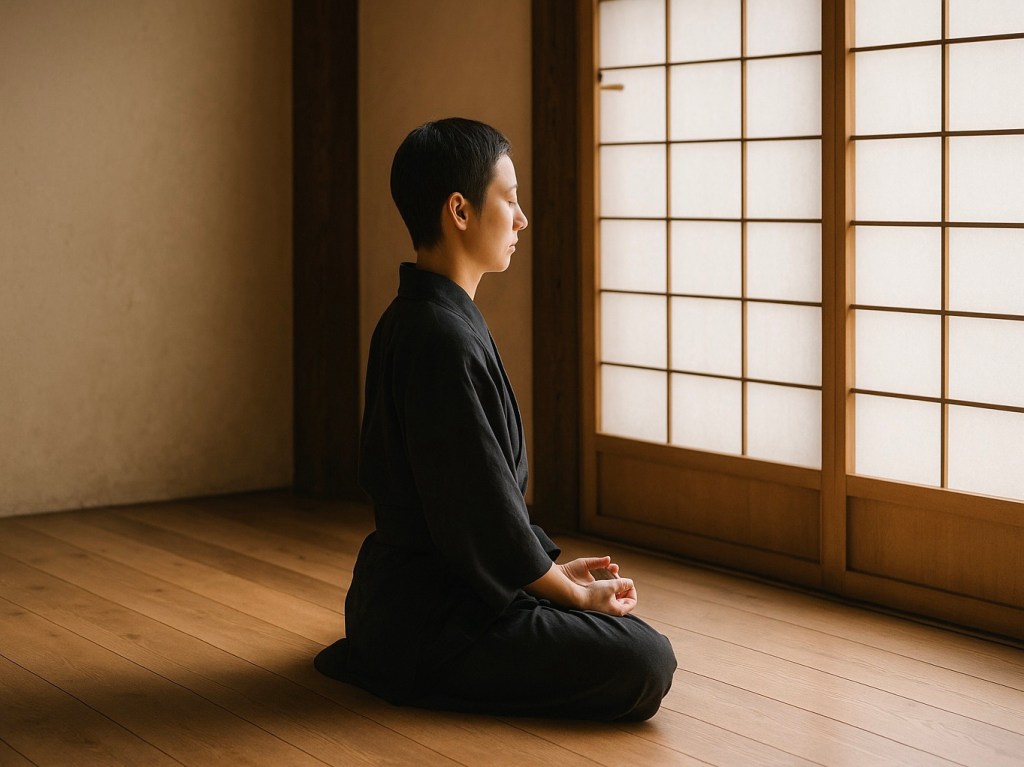
禅は、仏教の一つの考え方です。座禅をして、自分の心を見つめることを大切にします。座禅では、静かに座り、呼吸を整え、心を落ち着けます。そして、いろいろな考えを手放して、「今この瞬間」を感じるようにします。
禅はもともとインドで生まれました。インドの「ディヤーナ(瞑想)(めいそう)」という考えが中国に伝わり、「禅那(ぜんな)」という言葉になりました。その後、日本に「禅」として伝わり、多くの人に広まりました。禅を日本に伝えたのは、中国へ修行に行って、帰ってきたお坊さんたちです。彼らは、ただ何かを読んで学ぶだけでなく、実際に座って体で学ぶ修行を大切にしました。
日本では、禅の考え方が茶道や武道、庭づくり、書道などにも影響を与えました。「静けさ」や「余白」の美しさ、「今を大切にする」という気持ちは、日本人の文化や生活の中に今も生きています。
禅には、短い言葉で大切な考えを表す「禅語(ぜんご)」があります。たとえば、「知足(ちそく)」という言葉は、「足りていることを知る」という意味です。今あるものに満足し、感謝する心を大切にします。「一期一会(いちごいちえ)」という言葉は、「この出会いは一生に一度かもしれない。だから、この時を大切にしましょう」という意味です。
今では、禅はアメリカやヨーロッパでもよく知られています。ストレスを減らす方法としての「マインドフルネス」や、物を少なくする「ミニマルな生活」など、現代のライフスタイルにも影響を与えています。しかし、実用的な面ばかりが強調されると、本来の禅の深い意味から少し離れてしまうこともあります。禅は、何かのためにするのではなく、ただ座り、今を感じることを大切にします。
禅の考え方は、静かでシンプルですが、その中に深い気づきがあります。日々の生活の中で、ふと立ち止まり、自分の心に耳をすませる時間を持ってみると、禅の世界に少し近づけるかもしれません。
With Furigana
日本(にほん)の禅(ぜん)と西洋(せいよう)のZen
禅(ぜん)は、仏教(ぶっきょう)の一つの考(かんが)え方(かた)です。座禅(ざぜん)をして、自分(じぶん)の心(こころ)を見(み)つめることを大切(たいせつ)にします。座禅(ざぜん)では、静(しず)かに座(すわ)り、呼吸(こきゅう)を整(ととの)え、心(こころ)を落(お)ち着(つ)けます。そして、いろいろな考(かんが)えを手放(てばな)して、「今(いま)この瞬間(しゅんかん)」を感(かん)じるようにします。
禅(ぜん)はもともとインドで生(う)まれました。インドの「ディヤーナ(瞑想(めいそう))」という考(かんが)えが中国(ちゅうごく)に伝(つた)わり、「禅那(ぜんな)」という言葉(ことば)になりました。その後(ご)、日本(にほん)に「禅(ぜん)」として伝(つた)わり、多(おお)くの人(ひと)に広(ひろ)まりました。禅(ぜん)を日本(にほん)に伝(つた)えたのは、中国(ちゅうごく)へ修行(しゅぎょう)に行(い)って、帰(かえ)ってきたお坊(ぼう)さんたちです。彼(かれ)らは、ただ何(なに)かを読(よ)んで学(まな)ぶだけでなく、実際(じっさい)に座(すわ)って体(からだ)で学(まな)ぶ修行(しゅぎょう)を大切(たいせつ)にしました。
日本(にほん)では、禅(ぜん)の考(かんが)え方(かた)が茶道(さどう)や武道(ぶどう)、庭(にわ)づくり、書道(しょどう)などにも影響(えいきょう)を与(あた)えました。「静(しず)けさ」や「余白(よはく)」の美(うつく)しさ、「今(いま)を大切(たいせつ)にする」という気持(きも)ちは、日本人(にほんじん)の文化(ぶんか)や生活(せいかつ)の中(なか)に今(いま)も生(い)きています。
禅(ぜん)には、短(みじか)い言葉(ことば)で大切(たいせつ)な考(かんが)えを表(あらわ)す「禅語(ぜんご)」があります。たとえば、「知足(ちそく)」という言葉(ことば)は、「足(た)りていることを知(し)る」という意味(いみ)です。今(いま)あるものに満足(まんぞく)し、感謝(かんしゃ)する心(こころ)を大切(たいせつ)にします。「一期一会(いちごいちえ)」という言葉(ことば)は、「この出会(であ)いは一生(いっしょう)に一度(いちど)かもしれない。だから、この時(とき)を大切(たいせつ)にしましょう」という意味(いみ)です。
今(いま)では、禅(ぜん)はアメリカやヨーロッパでもよく知(し)られています。ストレスを減(へ)らす方法(ほうほう)としての「マインドフルネス」や、物(もの)を少(すく)なくする「ミニマルな生活(せいかつ)」など、現代(げんだい)のライフスタイルにも影響(えいきょう)を与(あた)えています。しかし、実用的(じつようてき)な面(めん)ばかりが強調(きょうちょう)されると、本来(ほんらい)の禅(ぜん)の深(ふか)い意味(いみ)から少(すこ)し離(はな)れてしまうこともあります。禅(ぜん)は、何(なに)かのためにするのではなく、ただ座(すわ)り、今(いま)を感(かん)じることを大切(たいせつ)にします。
禅(ぜん)の考(かんが)え方(かた)は、静(しず)かでシンプルですが、その中(なか)に深(ふか)い気(き)づきがあります。日々(ひび)の生活(せいかつ)の中(なか)で、ふと立(た)ち止(ど)まり、自分(じぶん)の心(こころ)に耳(みみ)をすませる時間(じかん)を持(も)ってみると、禅(ぜん)の世界(せかい)に少(すこ)し近(ちか)づけるかもしれません。
English Translation
Japanese Zen and Western “Zen”
Zen is one way of thinking in Buddhism. In Zen, it is important to sit in meditation and look deeply into your own mind. During this sitting meditation, called zazen, you sit quietly, focus on your breathing, and calm your mind. You try to let go of various thoughts and become aware of the present moment.
Zen originally came from India. The Indian concept of meditation, dhyāna, was passed on to China, where it became known as chánnà (Zenna), and was later shortened to chán (Zen). This teaching was eventually brought to Japan and became known as Zen. It spread widely among the people. Zen was introduced to Japan by monks who had gone to China to train and brought the teachings back with them. They valued not only learning through reading, but also learning through sitting and experiencing with the body.
In Japan, the ideas of Zen influenced tea ceremony, martial arts, garden design, calligraphy, and more. The beauty of silence and empty space, and the attitude of cherishing the present moment, continue to live on in Japanese culture and everyday life.
Zen also includes short phrases that express deep ideas. These are called zen-go (Zen sayings). For example, chisoku means “to know satisfaction.” It teaches us to be content with what we have and to feel grateful. Another famous saying is ichigo ichie, which means “one meeting, one chance.” It reminds us that a meeting may happen only once in a lifetime, so we should treasure each moment.
Today, Zen is also well known in places like the United States and Europe. Zen ideas have influenced modern lifestyles, such as mindfulness to reduce stress and minimalist living with fewer things. However, when the practical side is emphasized too much, the deeper meaning of Zen can be lost. Zen is not something you do for a specific purpose—you simply sit and feel the present moment.
The ideas of Zen are quiet and simple, but within them lies a deep kind of awareness. In daily life, if you pause for a moment and listen to your own heart, you may find yourself a little closer to the world of Zen.
読解問題
1. 記事の内容に合うのはどれですか。
A. 禅では、たくさんのことを考えることが大切です。
B. 禅では、「今この瞬間」を感じることを大切にします。
C. 禅は中国で生まれ、日本には来ていません。
D. 禅では、本を読んで学ぶことだけが大切です。
正解
B
2. 記事の内容に合うのはどれですか。
A. 禅は、今ではアメリカやヨーロッパでも知られています。
B. 禅は、昔の人しか知らない考え方です。
C. 禅は、スポーツだけに使われる考えです。
D. 禅は、今の日本人には人気がありません。
正解
A
3. 記事の内容に合わないのはどれですか。
A. 禅の考えは、書道や庭づくりにも影響を与えました。
B. 禅語は、大切な考えを短い言葉で表します。
C. 禅は、日本から中国に伝わりました。
D. 禅では、心を落ち着けることが大切です。
正解
C
4. 記事によると、「知足」という言葉について正しいのはどれですか。
A. 足りないものをもっとほしくなる気持ちです。
B. いろいろなことをがまんする意味です。
C. 今あるものに満足する気持ちです。
D. 物をできるだけ少なくすることです。
正解
C
話しましょう!
- あなたは、どんな時に「今この瞬間」を大切にしていますか?
- 毎日、静かに座って心を落ち着ける時間はありますか?どんな時にしますか?
- 「知足(ちそく)」の考えについてどう思いますか?あなたは、今あるもので満足できますか?
- あなたにとって、「一期一会(いちごいちえ)」を大切にしたいと思うのは、どんな時ですか?
- 茶道(さどう)や書道(しょどう)のような、日本の文化に触れたことがありますか?どう思いましたか?
- 禅はインドから中国へ、そして日本に伝わりました。あなたの国には、他の国から伝わった文化がありますか?
- 禅は日本の生活や文化に深く関わっています。あなたの国でも、そういう文化はありますか?
- 記事では、西洋では禅が「実用的なもの」として広まっていると書いてあります。それについてどう思いますか?
- あなたは、ストレスを減らすために、どんなことをしていますか?
- あなたは、「ミニマルな生活(少ない物で生活すること)」をしたいと思いますか?その理由も教えてください。
English translation
Let’s talk!
- When do you value the present moment?
- Do you have time to sit quietly and calm your mind each day? When do you do it?
- What do you think about the idea of chisoku (being satisfied with what you have)? Are you satisfied with what you have now?
- In what kind of situations do you want to value ichigo ichie (“one meeting, one chance”)?
- Have you ever experienced Japanese culture such as tea ceremony or calligraphy? What did you think?
- Zen came to Japan from China, and before that from India. Are there any cultures in your country that originally came from other countries?
- Zen is deeply connected to Japanese life and culture. Are there any cultures in your country that are also closely connected to daily life?
- The article says that in the West, Zen has spread as something “practical.” What do you think about that?
- What do you do to reduce stress?
- Would you like to try a minimalist lifestyle (living with fewer things)? Please tell us why or why not.
Enjoy learning!
 Nihongo Articles